The Bandwidth Demands of Modern Business
Canadian businesses are consuming more bandwidth than ever before. Cloud computing, video conferencing, VoIP phone systems, SaaS applications, remote work, and IoT devices have collectively transformed the modern office into a data-intensive environment that traditional copper-based internet connections struggle to support.
Fibre optic internet isn't just faster — it's a fundamentally different technology that eliminates the bottlenecks holding your business back. Here's why fibre is the future, and why Canadian businesses should be making the switch now.
Understanding Fibre Optic Technology
Traditional internet connections (DSL and cable) transmit data as electrical signals over copper wires. Fibre optic internet transmits data as pulses of light through thin glass fibres. This difference in transmission medium is what gives fibre its dramatic performance advantages.
Key Technical Advantages
- Speed: Fibre connections commonly deliver 1 Gbps symmetrical (equal upload and download speeds), with 10 Gbps and higher available for business customers
- Latency: Light travels faster than electrical signals, resulting in lower latency — critical for real-time applications like VoIP and video conferencing
- Symmetrical bandwidth: Unlike cable internet where upload speeds are a fraction of download speeds, fibre provides equal speeds in both directions
- Distance: Fibre signals don't degrade over distance like copper. You get the same performance whether you're 100 metres or 10 kilometres from the provider's equipment
- Reliability: Fibre is immune to electromagnetic interference, radio frequency interference, and weather conditions that can degrade copper connections
Why Symmetrical Upload Speeds Matter
This is the advantage that most business owners underestimate. With traditional cable internet, you might get 300 Mbps download but only 15 Mbps upload. For consumer use, that's acceptable. For business use, it's a serious limitation.
Consider what your business uploads daily:
- Cloud backups — Your entire backup window is constrained by upload speed. A 500 GB backup at 15 Mbps takes over 74 hours. At 1 Gbps, it takes about 67 minutes
- Video conferencing — Each participant in a high-quality video call needs approximately 3-5 Mbps upload. With 15 Mbps total upload, you can support 3-5 simultaneous video calls before quality degrades
- VoIP phones — Each call uses approximately 100 Kbps upload. While individually small, 50 simultaneous calls consume 5 Mbps
- Cloud application data — Every document saved to SharePoint, every file uploaded to Google Drive, every record updated in your CRM uses upload bandwidth
- CCTV remote viewing — If your security cameras stream to a cloud service or remote monitoring centre, each camera stream consumes 2-8 Mbps of upload bandwidth
When these demands compete for limited upload bandwidth, everything slows down. Fibre eliminates this constraint entirely.
The Canadian Fibre Landscape
Canada has been steadily expanding its fibre infrastructure, though availability varies significantly by region.
Major Fibre Providers
- Bell Fibe — Extensive FTTH (Fibre to the Home/Business) coverage across Ontario and Quebec, with business plans offering up to 3 Gbps
- Rogers — Expanding fibre network in Ontario, though many business connections still use hybrid fibre-coaxial infrastructure
- Telus PureFibre — Leading fibre deployment in British Columbia and Alberta with aggressive expansion plans
- Beanfield — Toronto-focused provider offering dedicated fibre connections popular with businesses in the downtown core
- Allstream/Zayo — Enterprise-grade dedicated fibre for larger businesses requiring guaranteed bandwidth
Government Investment
The Canadian government has committed billions of dollars to expanding broadband infrastructure through programs like the Universal Broadband Fund. The goal of providing 98% of Canadians with access to high-speed internet by 2026 is driving fibre expansion into suburban and rural commercial areas that previously had limited options.
Did You Know? The CRTC has declared broadband internet a basic telecommunications service in Canada and set a target of 50 Mbps download and 10 Mbps upload as the minimum standard. Fibre dramatically exceeds these minimums and positions your business for decades of growth.
Business Benefits Beyond Speed
Raw speed is just the beginning. Fibre optic internet delivers business benefits that extend well beyond faster downloads.
Improved Productivity
Slow internet is the silent productivity killer. Employees waiting for files to upload, video calls freezing mid-sentence, cloud applications loading slowly — these micro-delays add up to hours of lost productivity each week. Fibre eliminates these friction points, allowing your team to work at the speed of thought.
Better Cloud Performance
If your business uses cloud services — and nearly every business does — fibre transforms the experience. SaaS applications like Salesforce, HubSpot, and QuickBooks Online feel as responsive as locally installed software. Cloud-hosted virtual desktops become genuinely usable. Large file transfers to cloud storage happen in seconds instead of minutes.
Enhanced Communication
VoIP phone systems and video conferencing platforms perform dramatically better on fibre. Crystal-clear voice quality, HD video without buffering, and reliable screen sharing become the norm rather than the exception. For businesses with remote workers or multiple locations, this improvement in communication quality directly impacts collaboration and client relationships.
Competitive Advantage
Fibre-connected businesses can adopt technologies and workflows that competitors on slower connections cannot. Real-time collaboration, large dataset analysis, AI-powered tools, and immersive client presentations all require substantial bandwidth. Being fibre-connected positions your business to adopt these capabilities first.
Making the Switch: What to Consider
Transitioning to fibre optic internet involves more than calling a provider and scheduling an installation. Here's what to plan for:
Internal Network Readiness
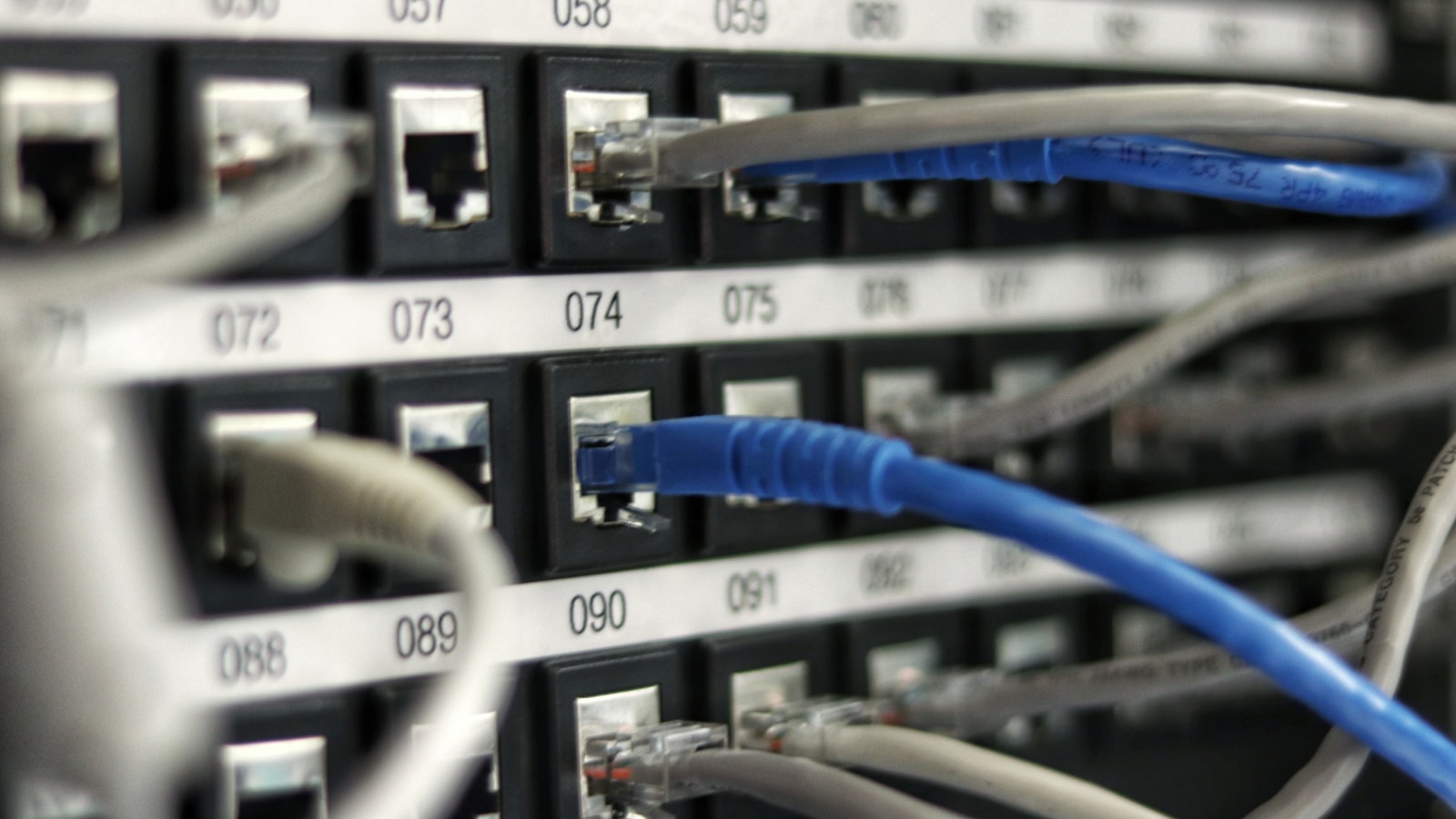
There's no point in having a 1 Gbps fibre connection if your internal network can only handle 100 Mbps. Ensure your switches, routers, and cabling can handle the speeds your fibre connection delivers. If your office is still running on Cat5e cabling with 100 Mbps switches, you'll need to upgrade your internal infrastructure to realize the full benefit of fibre.
Redundancy Planning
Fibre is reliable, but no single connection is immune to outages. Consider maintaining a secondary internet connection (even a basic cable or LTE connection) as a failover. SD-WAN technology can automatically switch between connections during an outage, maintaining business continuity.
Provider Selection
- Compare SLA (Service Level Agreement) guarantees — look for 99.9% uptime or better
- Understand the difference between shared fibre (GPON) and dedicated fibre. Dedicated connections guarantee your bandwidth isn't shared with other customers
- Ask about installation timelines — fibre installations can take weeks to months depending on whether existing infrastructure reaches your building
- Negotiate contract terms carefully — multi-year contracts often come with significant discounts but lock you into a provider
Is Your Business Ready for Fibre?
If your business experiences any of these symptoms, it's time to explore fibre:
- Video calls frequently freeze or drop
- Cloud applications feel sluggish, especially during peak hours
- File uploads and backups take excessively long
- Your team complains about slow internet
- You're planning to adopt new cloud-based tools or expand your workforce
At TechBoss, we help Canadian businesses evaluate their connectivity needs, select the right fibre provider, and ensure their internal network is ready to take full advantage of fibre speeds. From network infrastructure upgrades to complete office technology overhauls, we're your partner in building a faster, more reliable business.
Contact us today or request a free quote to discuss how fibre optic internet can transform your business operations.